
Vineyard threats: drought
In the second part of our series on vineyard threats and the impact of extreme weather, Westgarth Wines wine specialist Maurizio Broggi looks at the problems caused by drought and water stress.
The conditions for drought
Drought is a prolonged period with insufficient precipitation which leads to severe water stress in plants, thus posing a significant threat to viticulture worldwide. While traditionally associated with warm and hot climate regions like California, Australia, South Africa, and Chile, the increasing frequency and intensity of droughts due to climate change are expanding this threat even to cool and moderate climate regions such as Burgundy.
The impact of drought
Drought conditions, characterized by prolonged water deficit, can significantly impact grapevine physiology and ultimately wine quality. Severe drought and water stress can drastically reduce growth and yields, with potentially detrimental effects on the ripening process.
Insufficient water availability between fruit set (when flowers develop into berries) and veraison (the onset of ripening were the berries change color) can compromise floral bud initiation, ultimately reducing bud fruitfulness and potential yields for the following season.
Drought also disrupts nutrient uptake due to limited soil moisture. In response, vines may draw energy for growth from carbohydrate reserves stored in the permanent wood, leading to decreased energy reserves.
Preventative measures
The vines themselves have their own defense mechanism here. Insufficient water availability triggers the closure of the stomata (the microscopic pores on plant leaves that control the exchange of gases between the plant and the atmosphere). This is a preventative measure employed by plants to limit water loss through transpiration.
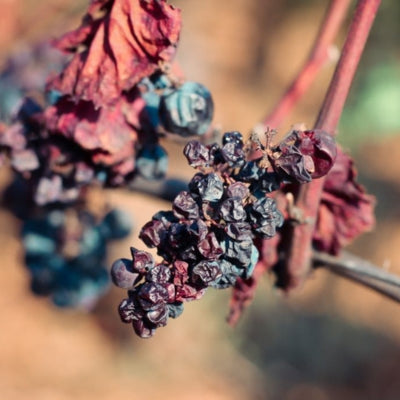
However, this closure also restricts carbon dioxide uptake, thereby compromising photosynthesis and ultimately halting growth. In extreme drought conditions, vines may completely shut down non-essential functions to minimize water loss and prioritize survival. This may involve the death of roots, wilting and falling of leaves, and fruit desiccation.
The adoption of drought-resistant rootstocks and grapevine cultivars represents a potential strategy to mitigate the negative effects of drought and water stress on vineyards. Grape varieties such as Grenache, Carignan, or Cinsault are known for their tolerance to dry conditions. However, this is not always an option for regions bound to specific varietals by stylistic choices or regulations.
Naturally, in regions with unrestricted access to irrigation (if water is available), such as many New World winegrowing areas, water availability is a relatively simple and pragmatic solution to the threat if drought stress. But many Old World winegrowing areas are bound by rules regarding the unadulterated expression of terroir and vintage, and as such must play the hand delt to them by the will of nature.
Want to read more? Take a look at some of our other blogs:
Leave a comment
Also in News


Collectors Corner: Can your Margaux or Sassicaia hedge the dollar?
Michael Burry explores fine wine dollar hedge